Pressure transducers for pumps, hydraulics and process lines in Odisha & Chhattisgarh
Electronic pressure measurement with 4–20 mA or voltage output, for control loops, protection and monitoring.
- Wide range of spans
- Standard outputs
- Stainless wetted parts
Get a quick quote
Share your requirement — we call back with options and price.
A pressure transducer converts pressure into an electrical signal that a PLC, drive or display can use. It is how a booster pump holds constant pressure, how a hydraulic power pack protects itself from overload and how a control room sees what is happening in a pipeline without someone reading a gauge.
We supply pressure transducers and transmitters to steel, power, mining and water applications in Odisha and Chhattisgarh. Selection is about more than range: media compatibility, pressure spikes, temperature and the signal your system expects all matter.
Plants in Odisha and Chhattisgarh present a few recurring challenges for pressure instruments: water hammer on long pump delivery lines, pulsation on reciprocating and plunger pumps, and electrical noise from large drives. Choosing a robust sensor and installing it properly prevents most failures.
Where it is used
- Booster pump and constant-pressure systems
- Hydraulic power packs and presses
- Cooling water and fire water lines
- Compressed air headers
- High-pressure jetting and hydro test equipment
- Filter differential pressure monitoring
Key benefits
Wide range of spans
From low-pressure water lines to high-pressure hydraulics.
Standard outputs
4–20 mA two-wire, 0–10 V and other outputs to suit your PLC or drive.
Stainless wetted parts
SS 316L diaphragms for water, oil and many process media.
Spike protection
Snubbers and overload ratings to survive water hammer and pulsation.
Transducer, transmitter or gauge?
| Device | Output | Typical use |
|---|---|---|
| Pressure gauge | Local dial only | Visual check at the point of use |
| Pressure transducer | Electrical signal, often voltage or mA | OEM equipment, hydraulics, pump control |
| Pressure transmitter | Conditioned 4–20 mA, sometimes with HART or display | Process plants, long cable runs, control loops |
| Pressure switch | On/off contact at a set point | Simple alarms and trips |
In everyday use the terms transducer and transmitter overlap. What matters is the output signal, accuracy and robustness your application needs.
Selection guide
- Range: choose a span so normal operating pressure sits around the middle, with maximum pressure inside the range.
- Overpressure and spikes: water hammer and pump starts can exceed the range briefly; check proof pressure and add a snubber on pulsating lines.
- Gauge, absolute or sealed: most plant uses are gauge pressure; absolute is for vacuum or barometric-independent readings.
- Media and temperature: SS 316L suits most water and oil; steam needs a siphon to keep the sensor cool.
- Connection: 1/4 inch or 1/2 inch BSP or NPT are common; electrical connection by DIN plug, M12 or cable.
- Accuracy: specify total error over temperature, not just reference accuracy.
What to send us for a quote
Medium, pressure range and maximum pressure, gauge or absolute, process temperature, process connection, output signal and supply voltage, electrical connection, accuracy needed and quantity.
For high-pressure equipment such as plunger pumps, jetting units and hydro test pumps, also tell us the maximum pressure and whether the line pulsates, so we can include a suitable snubber or damping option.
Need help choosing?
Send us your application, duty and site conditions. We recommend the right model and quote with delivery to your plant.
Related
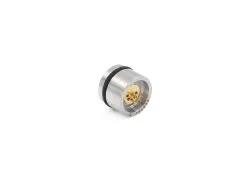
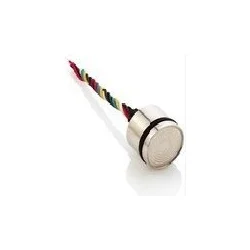
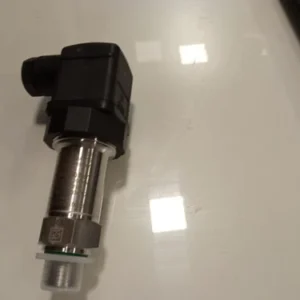
Pressure Transducers we supply
Ask for a price on any item — we confirm availability and delivery to your site.
Pressure Transducers: questions buyers ask
Straight answers to the questions plant teams ask us most.
Why does our pressure transducer fail after a few months on a pump line?
Pressure spikes from water hammer or pump starts often exceed the sensor's overload rating. Choose a model with higher proof pressure, add a snubber and check that check valves close softly.
Which output should we choose, 4–20 mA or 0–10 V?
4–20 mA is preferred for longer cable runs and electrically noisy plants, and it detects a broken wire as a reading below 4 mA. 0–10 V suits short connections on machines.
Can we use a pressure transducer on steam?
Yes, but protect it with a siphon or cooling element so condensate shields the diaphragm from live steam temperature, and check the rated media temperature.
What range should we choose for a 6 bar water line?
A 0–10 bar range is a common choice, keeping normal pressure near mid-scale with headroom for surges. Avoid ranges that are much larger than needed, as resolution suffers.
Can a transducer connect directly to a VFD for constant pressure?
Yes. Most drives accept a 4–20 mA feedback signal and have built-in PID to hold a set pressure. Check whether the drive supplies 24 V DC loop power.
You may also need

Flow Measurement Devices
The measurement and control devices that keep utilities, process lines and compressed-air systems running: flow, pressure, level, temperature and pneumatics.
View details
Hydrostatic Level Transmitters
Submersible and flange-mounted level sensors that turn water column pressure into a reliable 4–20 mA level signal.
View details
Hydro-Pneumatic Booster Systems
Packaged pump sets that hold steady water pressure on demand, without depending on an overhead tank.
View detailsSpecify your pressure transducer
Send the medium, range, connection and output signal, and we will recommend a suitable model with a quotation.