Pneumatic cylinders for plant and machine duty in Odisha & Chhattisgarh
Single and double acting cylinders in standard ISO dimensions, sized on force, stroke and mounting for gates, dampers and machines.
- ISO-standard sizes
- Single or double acting
- Sensor-ready
Get a quick quote
Share your requirement — we call back with options and price.
Pneumatic cylinders do the pushing and pulling in a plant: opening slide gates and flap valves on chutes, moving dampers, diverting material, clamping, lifting and indexing on machines. They are simple and robust, and when sized correctly they run for millions of cycles.
We supply pneumatic cylinders, mounting accessories and speed controllers to plants in Odisha and Chhattisgarh. Standard ISO dimensions mean replacement cylinders fit existing mountings, which simplifies stocking spares.
In steel, sponge iron and power plants across Odisha and Chhattisgarh, cylinders often work in punishing places: hot zones near kilns, dust-laden transfer points and outdoor gates exposed to monsoon rain. Choosing the right seals, rod material and protection for these locations is what turns a cylinder that lasts months into one that lasts years.
Where it is used
- Slide gates and flap gates on chutes
- Damper actuation in ducts
- Diverter valves in material handling
- Clamping and pressing on machines
- Bag filter and hopper discharge
- Packaging and bagging machines
Key benefits
ISO-standard sizes
ISO 15552 profile and tie-rod cylinders, ISO 21287 compact and ISO 6432 round cylinders.
Single or double acting
Spring return for simple tasks; double acting for controlled force both ways.
Sensor-ready
Magnetic pistons for reed or electronic position switches.
Dusty-area options
Scraper seals and stainless rods for dust, water and outdoor locations.
Cylinder force at 6 bar
Theoretical extend force equals air pressure multiplied by piston area. Allow a load factor of roughly 50–70% of theoretical force for dynamic loads and friction.
| Bore (mm) | Theoretical extend force at 6 bar (N) | Approx. (kgf) |
|---|---|---|
| 32 | 483 | 49 |
| 50 | 1,178 | 120 |
| 63 | 1,870 | 191 |
| 80 | 3,016 | 307 |
| 100 | 4,712 | 480 |
| 125 | 7,363 | 751 |
Retract force is lower because the piston rod reduces the effective area.
Selection guide
- Force: calculate the load, apply a load factor and choose the bore at your minimum line pressure, not compressor pressure.
- Stroke: long strokes with side load need a larger rod or guide; check buckling for long push strokes.
- Mounting: foot, flange, clevis or trunnion, chosen so the rod is not side-loaded through the stroke.
- Cushioning: adjustable air cushioning at the ends protects the cylinder and the load at higher speeds.
- Environment: for coal, ore or cement dust, use rod scrapers or bellows; for washdown or outdoor use, consider stainless rods.
- Air quality: dry, filtered air from a correctly sized air dryer greatly extends seal life.
What to send us for a quote
Bore, stroke, single or double acting, mounting style, rod end, port size, cushioning, operating pressure and environment. For replacements, send the code on the cylinder barrel or photographs with key dimensions.
For bulk orders or plant-wide standardisation, we can help you rationalise cylinder sizes so fewer spares cover more applications.
Need help choosing?
Send us your application, duty and site conditions. We recommend the right model and quote with delivery to your plant.
Related
Pneumatic Cylinder we supply
Ask for a price on any item — we confirm availability and delivery to your site.


Pneumatic Cylinder: questions buyers ask
Straight answers to the questions plant teams ask us most.
How do we choose cylinder bore size?
Work out the force needed, divide by a load factor of around 0.5 to 0.7, then find the bore that gives that force at your lowest reliable line pressure. Use the force table above as a quick reference.
Why do cylinder seals fail quickly in our plant?
Common causes are wet or dirty air, side loading of the rod and dust ingress at the rod seal. Improving air treatment, correcting alignment and fitting scraper seals usually solves this.
Will an ISO cylinder from a different brand fit our existing mounting?
Cylinders built to the same ISO standard, bore and mounting type share key mounting dimensions, so they are usually interchangeable. Confirm rod thread and port size before ordering.
Can cylinders work in high ambient temperatures near furnaces?
Standard seals have upper temperature limits. For hot areas, high-temperature seals such as FKM are available, and heat shielding helps.
How do we control cylinder speed?
Fit flow control valves, usually meter-out, at the cylinder ports. See our speed controllers page for selection.
Do you supply position sensors for cylinders?
Yes. Cylinders with magnetic pistons accept reed or electronic switches that confirm end positions to the PLC.
You may also need
Speed Controllers
Flow control valves that set how fast cylinders and actuators move, for smoother motion and longer equipment life.
View details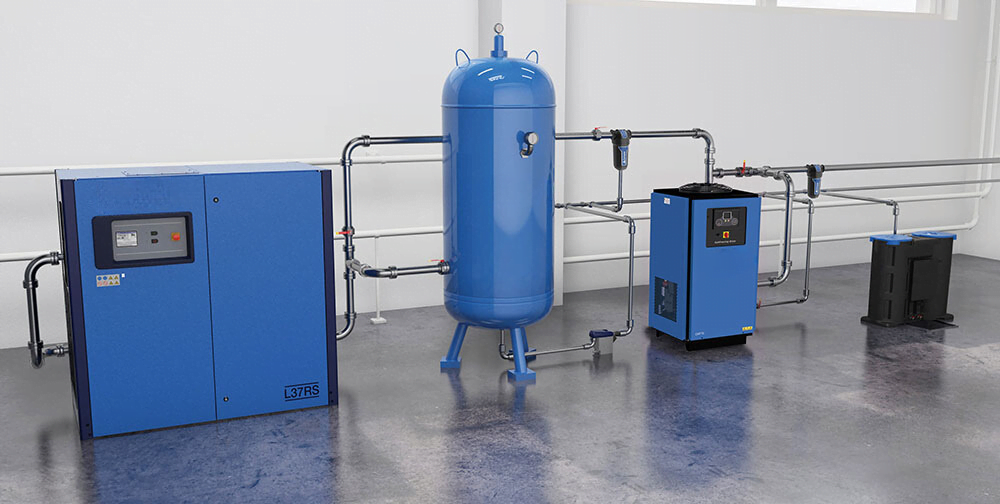
Air Dryer
Refrigerated and desiccant dryers, sized on your compressor output and the dew point your equipment actually needs.
View details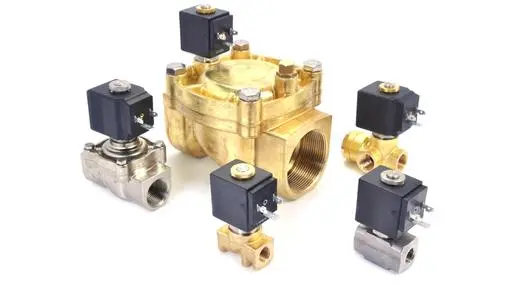
2 Way Solenoid Valve
Normally closed and normally open on/off valves, matched to the medium, pressure, orifice and coil voltage.
View detailsGet a quote for pneumatic cylinders
Send bore, stroke and mounting details, or photographs of the cylinder you need to replace.