Mist irrigation systems for Chhattisgarh & Odisha growers
Misting and fogging nozzles, lines, pumps and controls for nurseries, polyhouses, propagation and cooling.
- Fine droplets
- Cooling and humidity
- Better propagation
Get a quick quote
Share your requirement — we call back with options and price.
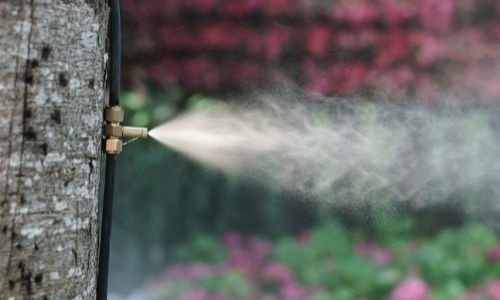
Mist irrigation sprays water as very fine droplets that hang in the air and settle gently on plants. It raises humidity, cools the growing area and keeps young cuttings and seedlings moist without saturating the growing medium.
We supply complete mist irrigation components for agricultural and horticultural farms through our group brands Greenly and TrueMist: misting and fogging nozzles, foggers, mist lines, pumps, filters and controllers. We help nurseries, polyhouses and farms in Chhattisgarh and Odisha put together a system that suits their crop and climate.
Mist systems also help in summer for growing crops under shade nets, where high temperatures and dry air can stress plants. Short, timed bursts keep the microclimate stable without wasting water.
Where it is used
- Plant propagation and cuttings
- Nurseries
- Polyhouses and greenhouses
- Shade-net houses
- Mushroom growing rooms
- Orchid and flower cultivation
- Livestock and poultry shed cooling
Key benefits
Fine droplets
Mist and fog nozzles create droplets small enough to raise humidity without wetting leaves heavily.
Cooling and humidity
Evaporative cooling lowers temperature in polyhouses and shade nets in summer.
Better propagation
Keeps cuttings and seedlings moist for higher rooting and germination.
Automatic cycles
Cycle timers and humidity controllers run short, frequent mist bursts.
Components of a mist irrigation system
| Component | Purpose |
|---|---|
| Misting and fogging nozzles, foggers | Break water into fine droplets |
| Anti-leak devices | Stop dripping from nozzles when the system switches off |
| Mist lines and fittings | Carry water to nozzles overhead or along benches |
| Pump (low or high pressure) | Supplies water at the pressure the nozzles need |
| Fine filters | Prevent nozzle clogging |
| Cycle timer or humidity controller | Runs short, frequent misting cycles automatically |
| Solenoid valves | Switch zones on and off |
We size the pump and filtration to the number of nozzles and their flow, so every nozzle in the line gets enough pressure to atomise correctly.
Low-pressure vs high-pressure misting
Low-pressure systems run from a standard pump and use foggers or mist nozzles to give a coarser mist. They are economical and suit propagation benches, nurseries and shade-net houses.
High-pressure systems use a dedicated pump to create much finer fog that evaporates before reaching the plants. They suit polyhouse cooling and humidity control where leaves should stay dry. See our misting systems and mist nozzles.
Whichever type you choose, nozzle spacing, line pressure and cycle timing decide how even the humidity and moisture will be across the growing area. We help set these during planning so the system performs as expected from the first day.
What to send us for a quote
- Use: propagation, cooling, humidity or a combination
- Area and height of the polyhouse, shade net or bench
- Crop grown and target humidity or temperature
- Water source and quality
Share details through request a quote.
Need help choosing?
Send us your application, duty and site conditions. We recommend the right model and quote with delivery to your plant.
Related
Mist Irrigation we supply
Ask for a price on any item — we confirm availability and delivery to your site.


Mist Irrigation: questions buyers ask
Straight answers to the questions plant teams ask us most.
What is the difference between misting and fogging?
Fogging produces much finer droplets than misting, so they evaporate in the air rather than settling on leaves. Misting gives slightly larger droplets that wet surfaces lightly. Fogging is preferred for cooling, misting for propagation.
Why are anti-leak devices needed?
When the pump stops, water left in the line drips from the nozzles onto plants, which can cause disease and waterlogging. Anti-leak valves close below a set pressure so nozzles shut off cleanly.
How often should a propagation mist system run?
Usually short bursts of a few seconds every few minutes during the day, adjusted to weather and crop stage. The aim is to keep a film of moisture on cuttings without soaking the medium.
How do I prevent nozzle clogging?
Use fine filtration suited to the nozzle orifice, and treat hard or iron-rich water. Clean or replace nozzles periodically, as fine orifices clog more easily than drip emitters.
Can mist irrigation cool a polyhouse in summer?
Yes. Evaporating fog absorbs heat and can noticeably lower temperatures, especially in dry weather. Good ventilation is needed so humid air can escape.
You may also need
Misting Systems
Engineered high-pressure misting for dust suppression, odour control and evaporative cooling, designed around your site.
View details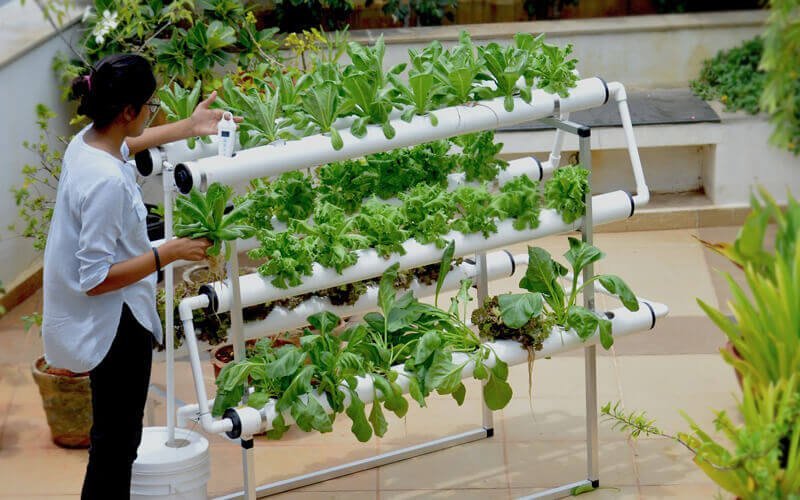
Hydroponics Equipment
Growing systems, pumps, nutrient dosing, misting and climate control for soil-free farms, from small units to commercial setups.
View details
Drip Irrigation
Laterals, emitters, filters, fertigation and fittings to build efficient drip systems for crops, orchards and plantations.
View detailsBuild your mist irrigation system
Tell us your crop, area and purpose and we will recommend nozzles, pump and controls.