Gas springs for machine guards, hatches and covers in Odisha & Chhattisgarh
Compact lift supports and dampers that make heavy lids, hatches and guards safe and easy to open and hold.
- Sized on force
- Fixed or lockable
- End fittings
Get a quick quote
Share your requirement — we call back with options and price.
A gas spring is a sealed cylinder filled with pressurised nitrogen. The gas pushes the rod outward with a near-constant force, which makes it ideal for lifting and holding lids, doors, guards and covers. Oil inside the cylinder gives damping at the end of travel, so movement stays controlled.
We supply gas springs for machinery, control panels, vehicle and equipment hatches, and maintenance covers to plants and workshops in Odisha and Chhattisgarh. Correct sizing is the difference between a cover that floats open and one that slams or will not stay up.
Heavy hinged guards and covers on conveyors, crushers and machinery are often propped open with rods or left to drop, which is a common cause of hand injuries. Correctly sized gas springs hold them steady and make inspection safer and quicker for maintenance staff.
Where it is used
- Machine guards and covers
- Control panel and enclosure doors
- Inspection hatches on conveyors and chutes
- Vehicle and mining equipment cabins
- Workshop equipment and tool storage
- Industrial furniture and adjustable tables
Key benefits
Sized on force
Force rating chosen from lid weight, centre of gravity and mounting geometry.
Fixed or lockable
Standard lift supports or lockable versions that hold any position.
End fittings
Ball sockets, eyelets and clevises to suit existing brackets.
Safer maintenance
Holds heavy covers open securely during inspection.
Types of gas spring
| Type | Function | Typical use |
|---|---|---|
| Lift support (compression) | Pushes outward to lift and hold | Machine guards, hatches, panel doors, tool box lids |
| Lockable | Locks at any position via a release mechanism | Adjustable seats, tables, inspection covers |
| Traction (tension) | Pulls inward | Doors and mechanisms where pull force is needed |
| Damper | Controls speed without lifting force | Slow-closing lids and doors |
How to size a gas spring
- Weight and centre of gravity: measure the lid weight and the distance of its centre of gravity from the hinge.
- Mounting points: the distance from hinge to spring mounting points sets the leverage and the force needed.
- Extended length and stroke: must suit the closed and open positions without bottoming out.
- Orientation: mount rod-down where possible, so oil lubricates the seal and damping works properly.
- Temperature: gas force rises with temperature and falls in the cold; account for the operating environment.
When replacing a spring, read the force (in N) and part number printed on the body, and measure the extended length and stroke.
What to send us for a quote
Force printed on the existing spring, extended length, stroke, body and rod diameter, end fitting type and quantity. For new designs, send lid weight, dimensions, hinge position and proposed mounting points.
For dusty or outdoor applications, ask about springs with protective sleeves or stainless steel construction, which better resist dirt and corrosion on the rod.
Need help choosing?
Send us your application, duty and site conditions. We recommend the right model and quote with delivery to your plant.
Related
Gas Springs: questions buyers ask
Straight answers to the questions plant teams ask us most.
How do we find the right force for a replacement gas spring?
Most gas springs have the force in newtons and a part number printed on the body. Order the same force and dimensions; if the print is unreadable, send the lid weight and mounting geometry.
Why does our gas spring no longer hold the lid open?
Gas springs gradually lose pressure over time, and seal damage from side loading, dirt or heat speeds this up. Replace both springs together if two are fitted, so forces stay balanced.
Should the gas spring be mounted rod up or rod down?
Rod down is preferred, as it keeps the seal lubricated and ensures end-of-stroke damping works.
Can gas springs work in hot areas near furnaces?
Force increases with temperature, and standard seals have upper limits. For hot environments, ask for springs rated for higher temperature and shield them from radiant heat.
Can one gas spring be used instead of two?
On narrow lids, one may be enough. On wider lids, two springs prevent twisting; each then carries roughly half the required force.
You may also need
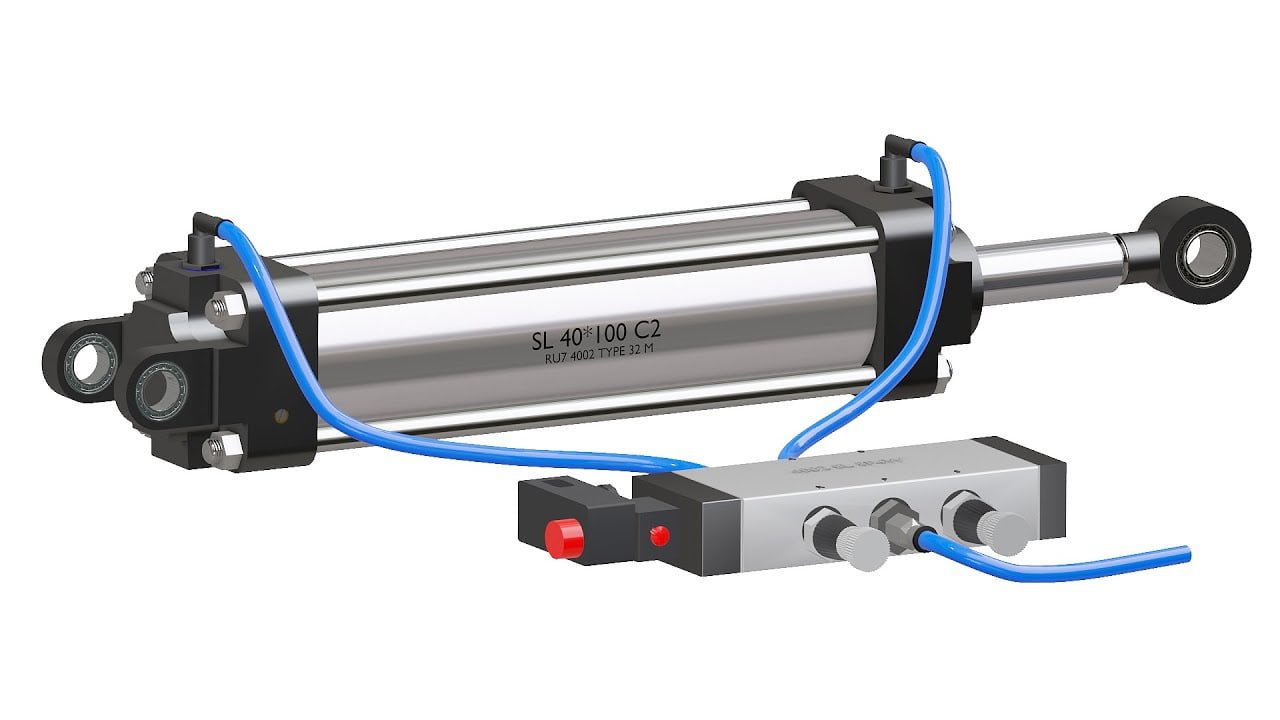
Pneumatic Cylinder
Single and double acting cylinders in standard ISO dimensions, sized on force, stroke and mounting for gates, dampers and machines.
View details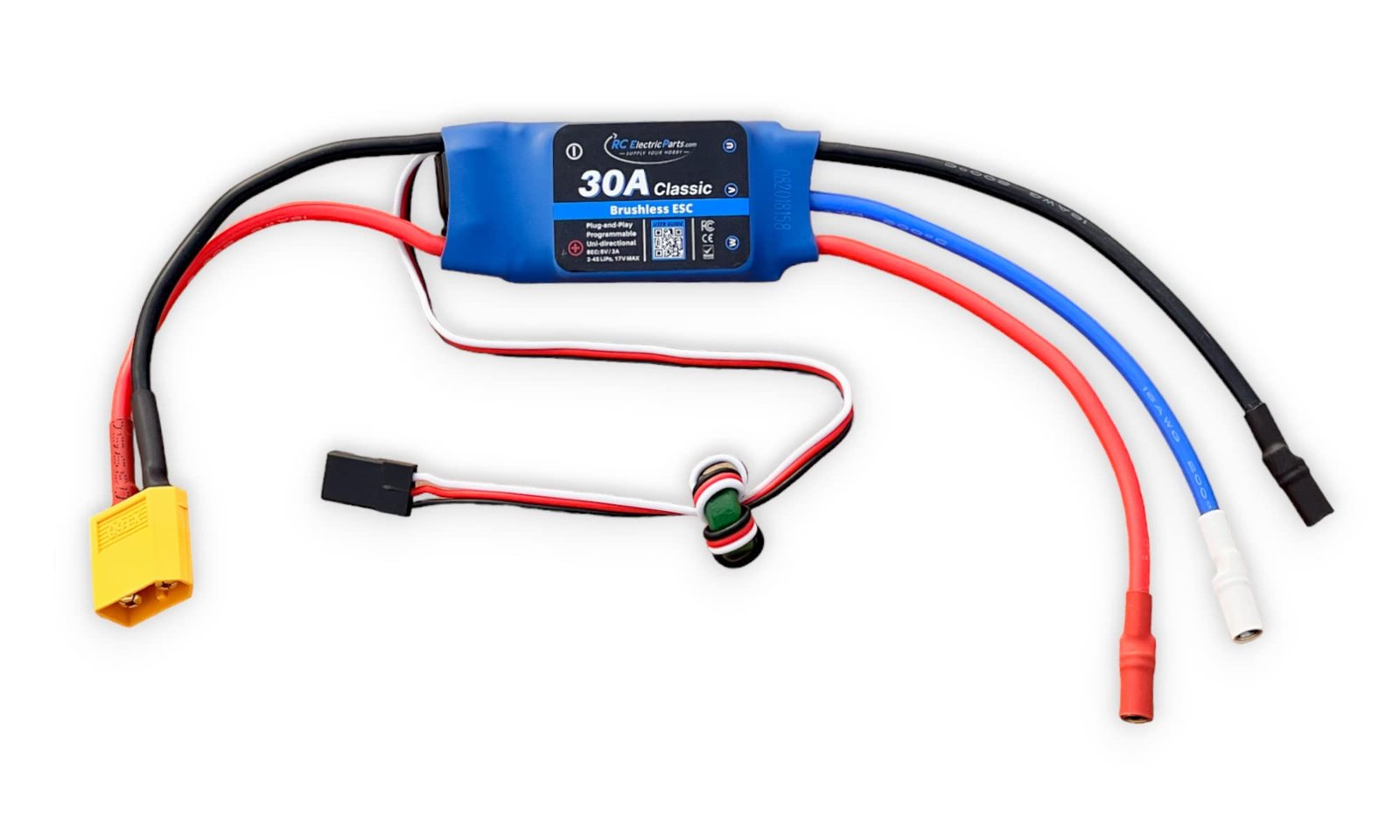
Speed Controllers
Flow control valves that set how fast cylinders and actuators move, for smoother motion and longer equipment life.
View details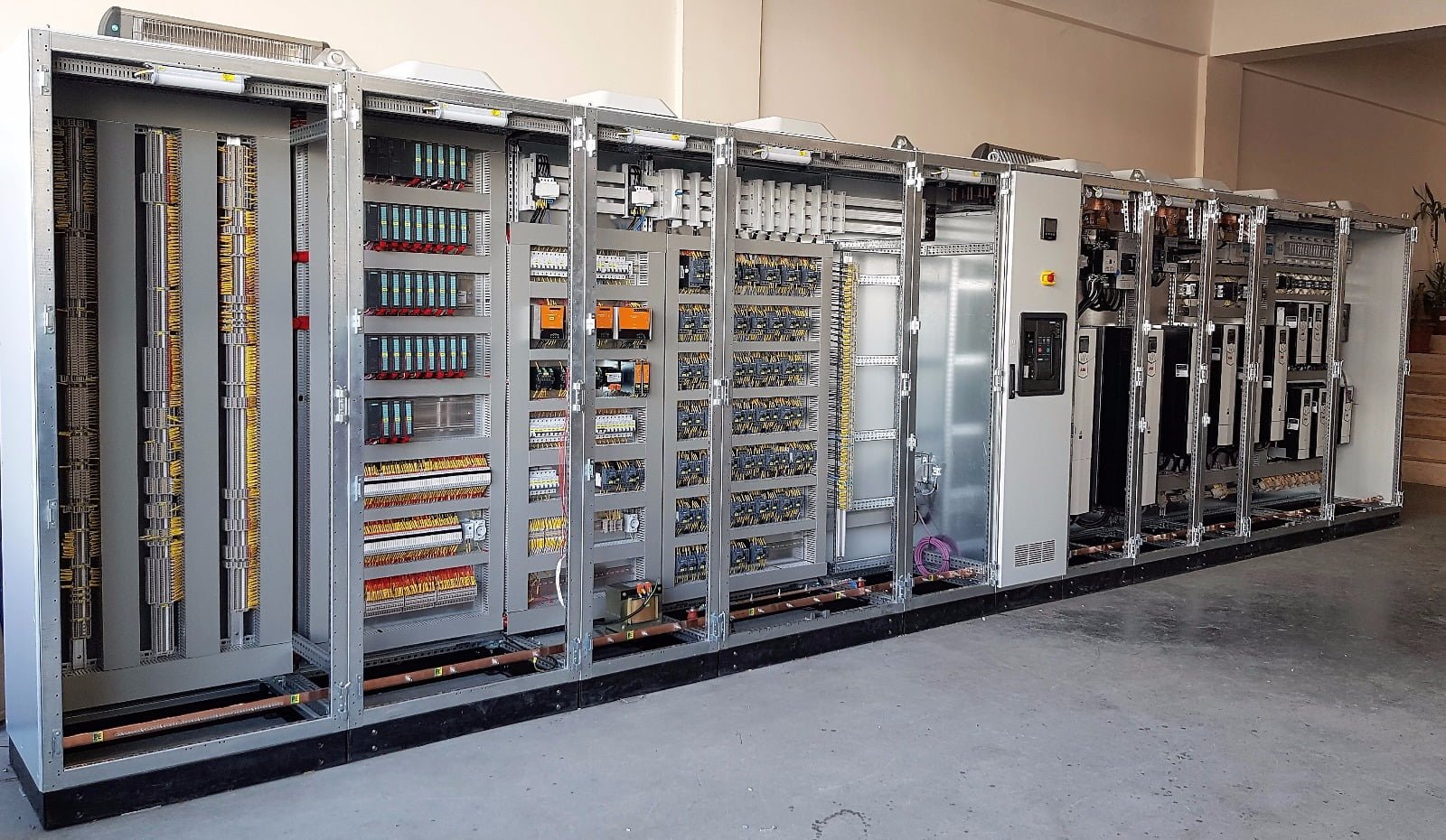
PLC Automation Control Panels
Engineered PLC, remote I/O and VFD panels, designed, built and tested to your drawings and the conditions on your shop floor.
View detailsGet the right gas spring
Send the printed force and dimensions, or the lid details, and we will quote suitable gas springs.