Hydrostatic level transmitters for sumps, tanks and borewells in Odisha & Chhattisgarh
Submersible and flange-mounted level sensors that turn water column pressure into a reliable 4–20 mA level signal.
- Submersible design
- 4–20 mA output
- SS 316L sensor
Get a quick quote
Share your requirement — we call back with options and price.
A hydrostatic level transmitter measures the pressure of the liquid above its sensor and converts it into level. Because the pressure depends only on liquid height and density, the reading is unaffected by foam, vapour, dust or tank shape, which makes this one of the most dependable level methods for water and wastewater.
We supply submersible and flange-mounted hydrostatic level transmitters, including piezoresistive designs, to plants, mines and municipal users in Odisha and Chhattisgarh. Typical uses include pump control in sumps, tank level indication and borewell water level monitoring.
In mines and plants across Odisha and Chhattisgarh, sumps and pits fill quickly during the monsoon, and reliable level control keeps dewatering pumps running when they are needed and protects them from running dry. Hydrostatic transmitters are well suited to these deep, dirty and narrow installations.
Where it is used
- Sump and drainage pump control
- Overhead and underground water tanks
- Borewell and open well levels
- Mine dewatering sumps
- Effluent and clarifier tanks
- Reservoirs and cooling ponds
Key benefits
Submersible design
Lowered into sumps, tanks and borewells on a vented cable.
4–20 mA output
Direct connection to PLCs, pump controllers and drives.
SS 316L sensor
Stainless steel body and diaphragm for water and wastewater.
Surge protection option
Protection for outdoor sensors exposed to lightning-induced surges.
How hydrostatic level measurement works
Every metre of water exerts roughly 0.1 bar of pressure. A sensor at the bottom of a tank reads this pressure, and the transmitter converts it into a level signal, typically 4–20 mA across the chosen range. A vent tube in the cable references the sensor to atmospheric pressure, so changes in barometric pressure do not affect the reading.
For liquids other than water, the reading must be corrected for density. For slurries and sticky media, a flush diaphragm or flange-mounted version avoids clogging.
Selection guide
| Parameter | What to specify |
|---|---|
| Range | Maximum liquid height above the sensor, in metres of water column |
| Mounting | Submersible (hanging), flange or threaded on the tank bottom or side |
| Cable | Length and jacket (PUR, PE or PTFE) to suit the liquid and temperature |
| Wetted materials | SS 316L for water; other materials for aggressive chemicals |
| Output | 4–20 mA two-wire as standard; other outputs or displays on request |
| Protection | Surge protection for outdoor installations; stilling pipe in turbulent sumps |
Hang the sensor inside a perforated stilling pipe in turbulent sumps or near pump suctions, so the reading stays steady and the cable is protected.
What to send us for a quote
Liquid and its density and temperature, maximum level, mounting arrangement, cable length, output signal and power supply, whether a local display is needed and quantity.
For deep borewells, also tell us the casing diameter and the depth to the pump, so the sensor and cable can be installed without fouling the pump or riser pipe.
Need help choosing?
Send us your application, duty and site conditions. We recommend the right model and quote with delivery to your plant.
Related
Hydrostatic Level Transmitters we supply
Ask for a price on any item — we confirm availability and delivery to your site.


Hydrostatic Level Transmitters: questions buyers ask
Straight answers to the questions plant teams ask us most.
Can a hydrostatic transmitter control our sump pumps?
Yes. Its 4–20 mA signal goes to a PLC, pump controller or VFD, which starts and stops pumps at set levels or holds a constant level by varying pump speed.
Does foam or turbulence affect the reading?
Foam has little effect since the sensor measures liquid pressure. Turbulence near pump suctions can cause a fluctuating reading; a stilling pipe and signal damping solve this.
Why does the reading drift on our outdoor tank?
Common causes are a blocked or kinked vent tube, moisture entering the cable end, or temperature effects. Terminate the vented cable in a junction box with a breather, and protect it from water.
Can it measure diesel or chemicals?
Yes, with density correction and compatible wetted materials and cable. Share the liquid details so we can confirm suitability.
How is it different from a radar or ultrasonic level sensor?
Radar and ultrasonic sensors measure from above without contact, while hydrostatic sensors sit in the liquid. Hydrostatic is often more economical for deep sumps, wells and narrow openings.
You may also need
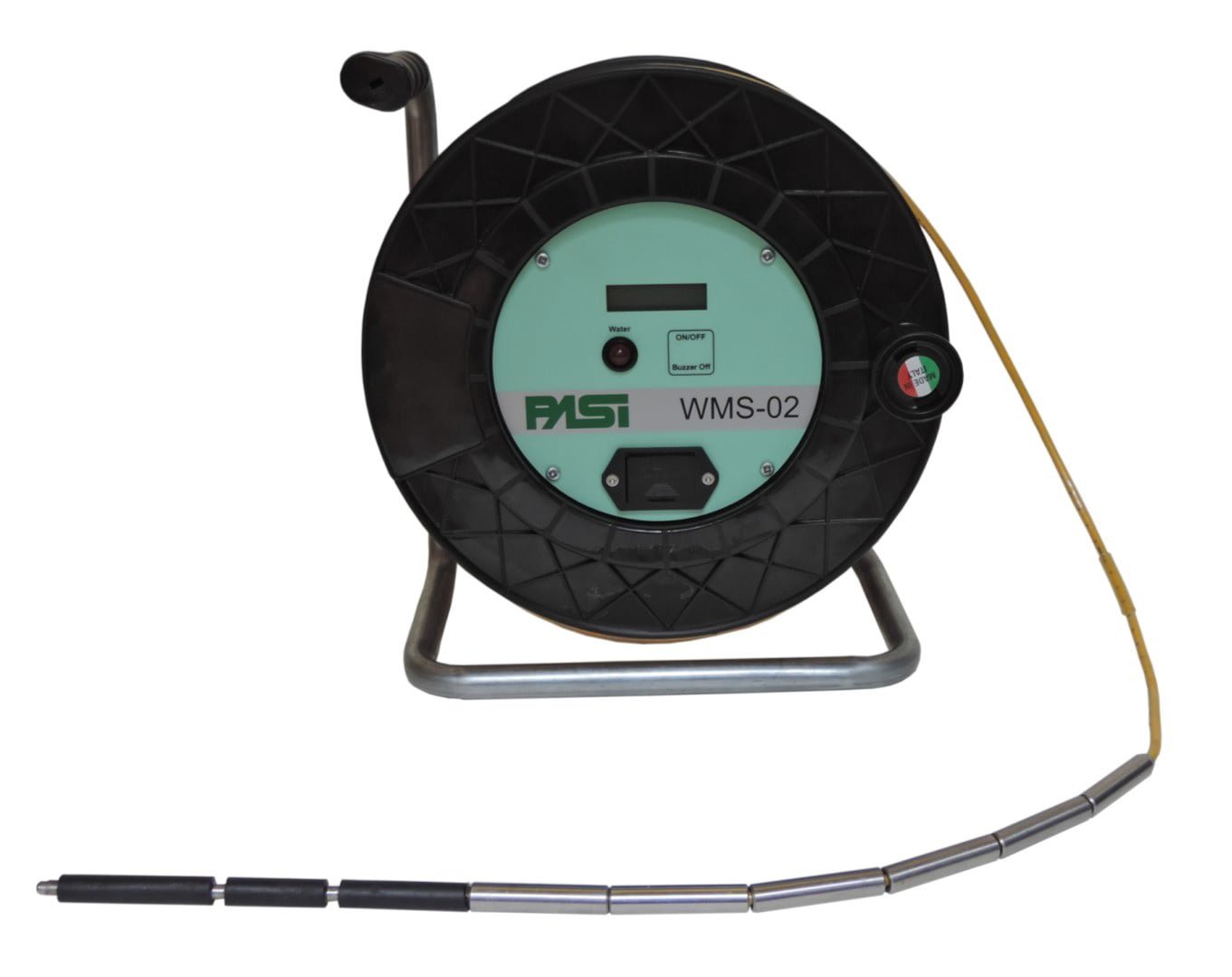
Digital Water Level Recorders
Automatic groundwater and surface water level logging, with optional telemetry for remote monitoring and reporting.
View details
Pressure Transducers
Electronic pressure measurement with 4–20 mA or voltage output, for control loops, protection and monitoring.
View details
Submersible Pumps
Borewell, openwell, dewatering and sewage submersibles selected to your depth, flow and water quality.
View detailsGet reliable level measurement
Send the liquid, range and mounting details, and we will recommend a hydrostatic level transmitter with a quotation.